Summary
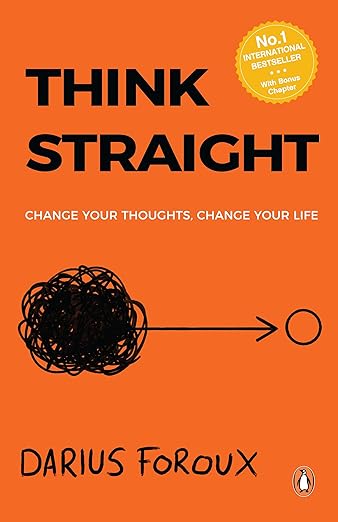
Summary of Think Straight by Darius Foroux
📖 Story in a Nutshell
Darius Foroux, like most of us, once believed that success came from doing more—reading more, working more, reacting faster. But after years of chasing clarity, he discovered the real breakthrough: you become what you consistently think.
Your thoughts aren’t harmless background noise—they’re the blueprint of your life. This book isn’t a philosophical lecture. It’s a practical guide to cleaning up your mental mess and learning to think with intention, focus, and clarity.
Darius shares personal failures, ancient wisdom, and modern insights to teach you a skill no school ever taught: how to think straight. Not react. Not worry. Think.
🧠 Core Mindset Shift
“You don’t need more thoughts—you need better thoughts.”
The biggest change comes when you stop believing every thought your mind offers and start filtering, selecting, and training your thinking like a disciplined habit.
✅ Key Practical Steps
- Notice & label your thoughts — Is it useful? Or just noise?
- Slow down your decisions — “Let me think about it” is a power move.
- Question your beliefs — Did you choose them, or did you inherit them?
- Create space to think daily — 10 minutes of silence can unlock major clarity.
- Use filters — Focus on what you can control. Discard what you can’t.
🔑 Action Triggers
- Ask: “What would a calm, clear thinker do right now?”
- Write: One idea per day that helps you live better.
- Say: “Think straight.” Use it as your personal reset button.
- Believe: Clarity is a skill. And you can train it—one thought at a time.
🎯 Bottom Line
You don’t need to “fix” your life. You just need to fix how you think about it. Train your mind to serve you—not sabotage you—and everything changes.
Chapter 1: You Become What You Think
📖 Mini-story recap
In the late 1800s, a young William James, fresh out of Harvard Medical School, found himself drowning in depression, haunted by panic attacks and hallucinations. For months, he contemplated suicide, convinced his suffering was biological and unavoidable—until one day, he read a line by French philosopher Charles Renouvier that shattered his hopelessness. Renouvier wrote that free will is the ability to hold onto a thought simply because we choose to. James decided—just for one year—to believe in free will. That one choice led him to not only heal himself, but become the father of American psychology.
This moment wasn’t magic—it was mental discipline. And it taught James (and now us) that what we choose to focus on determines the direction of our life.
🧠 Key insight / mindset shift
➡️ You don’t have to control all your thoughts—just choose which ones you give power to.
This is the foundation of thinking straight. The difference between “I can’t help but feel this way” and “I choose how I feel” is where transformation begins.
✅ Exact instructions (practical steps)
- Notice your inner narrative: Spend a few minutes daily becoming aware of your thoughts—without judgment.
- Decide what stays: Consciously choose to focus on thoughts that serve a purpose and dismiss those that don’t.
- Practice belief as a decision: Like James, try believing in something positive for a limited time—as a test. You may find it reshapes your reality.
🔑 Pointers for action
- Write down a dominant thought you’ve had this week. Is it helping or harming you?
- Replace “I can’t help it” with “I choose to think this way.” Say it out loud.
- Remember: action begins with thought. Better thoughts = better outcomes.
- Read this quote daily: “You become what you think about all day long.” — Ralph Waldo Emerson
Chapter 2: Why Do We Need a Book on Practical Thinking?
📖 Mini-story recap
Imagine you’re handed the most powerful tool in the universe—one capable of shaping reality, building empires, curing illness, and inventing wonders. But there’s a catch: no one gives you a manual.
That’s the human brain.
We’re all born with it, but very few learn how to use it practically. We often believe we’re rational thinkers, guided by logic and facts. But behavioral scientists like Dan Ariely have proven otherwise—we’re mostly driven by emotion, bias, and habit.
Darius Foroux realized this the hard way. He’d read tons of books on thinking, yet most didn’t help him change his thoughts. That’s why he wrote this one: not to impress you with theory—but to give you practical ways to train your mind like a muscle.
🧠 Key insight / mindset shift
➡️ Most people don’t have a thinking problem—they have a training problem.
You’re not broken—you just haven’t been taught how to think practically, clearly, and consistently.
✅ Exact instructions (practical steps)
- Admit your brain is untrained: Accept that raw intelligence means little without direction.
- Approach thinking like a skill: Treat it like fitness—show up daily, challenge yourself, and be deliberate.
- Open your mind: If you’re not ready to question your own thoughts, this book won’t help. But if you are—get ready to grow.
🔑 Pointers for action
- Ask yourself: “Have I ever intentionally trained my thinking?”
- Look for the usefulness of a thought, not just whether it feels good or familiar.
- Re-read this book more than once. It’s meant to be a lifelong anchor—not a one-time read.
- Decide: Use it or lose it. If you’re not ready to apply these ideas, better to walk away now than lie to yourself.
Chapter 3: Use What Works
📖 Mini-story recap
Darius Foroux wasn’t born with a calm, focused mind. In fact, just a few years ago, his life was in shambles—he was stressed out, discouraged, and on the verge of giving up on his entrepreneurial dreams. He’d read all the classic personal development books but still felt stuck. The breakthrough came not from some magical quote or overnight epiphany, but through a slow realization: He was giving power to thoughts that didn’t work.
Instead of questioning everything, he began filtering thoughts through a simple question: “Does this actually help me live better?” That single question became his compass—he stopped chasing perfect answers and started chasing what worked.
🧠 Key insight / mindset shift
➡️ Truth isn’t found in theory—it’s found in what works.
Your mind is not for entertaining random thoughts—it’s for finding what is useful, effective, and functional. Thinking should serve your life, not control it.
✅ Exact instructions (practical steps)
- Stop overthinking the “right way” to think. Instead, ask: “Does this thought lead to a better outcome in my real life?”
- Use your mind as a tool, not a trap. Practicality beats perfection.
- Watch your emotional responses—if a thought only causes pain and no progress, it’s not working. Let it go.
🔑 Pointers for action
- Journal prompt: “What thoughts do I repeat that don’t actually help me?”
- Use the Pragmatism Filter: Will this thought or decision improve my day, mood, business, or relationships?
- Quote to remember: “The true is that which works.” — John Dewey
- Your mental motto: “If it works, keep it. If it doesn’t, drop it.”
Chapter 4: Clear Thinking Requires Training
📖 Mini-story recap
Darius used to think that learning ended with school. Once you got your diploma, you were “done.” But over time, he noticed a troubling pattern—despite being educated, his thinking was messy, chaotic, and inconsistent. His mind jumped from thought to thought like a monkey on caffeine.
Then it hit him: he had never trained his mind. He had trained his body, his career, even his habits—but not his thinking. Like an untrained muscle, his mind grew weak and reactive. The fix wasn’t a genius IQ. It was reps. He needed mental workouts—daily thinking, reflecting, evaluating, and focusing. That’s when things started to shift.
🧠 Key insight / mindset shift
➡️ Clear thinking is not natural—it’s trained.
Most people never challenge their mind beyond survival mode. But just like going to the gym, your mind becomes stronger with practice.
✅ Exact instructions (practical steps)
- Treat thinking like a muscle: It needs reps—read, write, reflect, ask hard questions.
- Strain your brain deliberately: Don’t just relax and binge Netflix. Choose a daily “thinking practice”—journaling, note-taking, problem-solving.
- Stay consistent: Improvement comes not from intensity but regularity.
🔑 Pointers for action
- Schedule 10–15 minutes a day for “mental reps” (e.g., writing down your thoughts).
- Ask: “Is this thought familiar but useless?” If yes, it’s mental junk food.
- Train your brain like you’d train your body: Warm-up (read), workout (think), cool-down (reflect).
- Remember: An untrained mind defaults to chaos. A trained mind chooses clarity.
Chapter 5: From Chaos to Clarity
📖 Mini-story recap
In 2014, Darius made a bold move—from a small town in the Netherlands to the sprawling city of London. He found a room to rent, made plans to move into his first real apartment, and expected everything to go smoothly. But at the last moment, the landlady changed her mind. Suddenly, with all his belongings packed in a van and his family visiting to help, he had nowhere to live.
That night, overwhelmed and panicking in a hotel room, his mind spiraled into a storm of confusion and self-blame. Until he told himself, “Think straight.”
Instead of swimming in fear and emotion, he replaced the mental chaos with a single useful thought: “What’s the next solution?” He booked an Airbnb, regrouped—and even got the apartment in the end.
That moment became a turning point. He realized: the mind creates confusion, but it can also create clarity—if you train it to.
🧠 Key insight / mindset shift
➡️ One clear, purposeful thought is more powerful than a hundred anxious ones.
Mental clutter solves nothing. When you simplify your thinking, solutions become obvious.
✅ Exact instructions (practical steps)
- When you feel overwhelmed, pause and say aloud: “Think straight.”
- Picture your thoughts—literally. See them as a tangled ball, and imagine pulling out just one thread that’s useful.
- Focus on only one productive thought—the next small, actionable step.
🔑 Pointers for action
- Create two columns: Chaotic thoughts vs. Useful thoughts. Practice replacing one with the other.
- When emotions surge, take a breath and ask: “What would clarity look like right now?”
- Draw your thoughts like Darius did—visual clarity can boost mental clarity.
- Build a habit: in every stressful moment, pause for just 30 seconds to find the “one straight thought.”
Chapter 6: A (Very) Brief History of Thinking
📖 Mini-story recap
Thinking has been humanity’s secret weapon since ancient times. From Confucius and Socrates to Descartes and William James, great thinkers have explored one big question: How should we think?
Socrates taught us to question everything—even ourselves. Descartes doubted everything, including his own existence, until he concluded: “I think, therefore I am.” William James focused on useful thoughts rather than idealistic ones.
But here’s what most people miss: the quality of your thoughts creates the quality of your life. Today, life moves fast, technology bombards us, and confusion is normal. If we don’t consciously choose how to think, we’ll be buried in worry, distraction, and noise.
🧠 Key insight / mindset shift
➡️ Thinking isn’t random—it’s a method. And it must be useful to be valuable.
Don’t chase abstract theories. Chase thoughts that lead to better actions.
✅ Exact instructions (practical steps)
- Question your own beliefs: Don’t take your thoughts at face value. Ask, “Where did this belief come from?”
- Observe your thoughts as tools: Not all are equal—keep only the sharp ones.
- Think pragmatically: Ask, “What are the consequences of this belief?” If they’re harmful, it’s time to drop it.
🔑 Pointers for action
- Take 10 minutes to list 3 long-held beliefs. Ask: Are they still useful?
- Adopt a new lens: Useful > True. If a thought doesn’t improve your life, let it go—even if it feels “right.”
- Embrace practical thinking: It’s not flashy, but it works. That’s what matters.
- Practice this daily mantra: “What I think must serve what I want.”
Chapter 7: Life Is Not Linear
📖 Mini-story recap
Like many of us, Darius once believed life was a straight line: work hard, get a degree, get a job, live happily ever after. But life had other plans. He earned his degree and still struggled. He tried businesses that failed. He took detours, felt lost, doubted himself.
Then something clicked. Progress isn’t linear. It zigzags. It loops. Sometimes it even backtracks before moving forward again. For example, he wanted to invest in real estate but didn’t have the capital in big cities—so he returned to his hometown and made his first investment there. That “step back” became a breakthrough.
Once Darius stopped expecting life to follow a straight path, he stopped feeling like a failure—and started thinking creatively.
🧠 Key insight / mindset shift
➡️ Life rarely goes from A to B. It’s a maze, not a highway.
The moment you let go of the straight-line myth, you’ll see more paths to your goals.
✅ Exact instructions (practical steps)
- Ditch the idea that progress is predictable: Detours are part of the journey, not signs of failure.
- Define success by momentum, not milestones: Focus on moving forward, not moving perfectly.
- Explore alternate routes: Ask, “What’s another way to get where I want to go?”
🔑 Pointers for action
- Reflect: Where have you felt like you’re “behind”? Could that detour be a hidden advantage?
- Instead of asking “Why isn’t this working?” ask “What else could work?”
- Create a backup or alternate path to your top goal—you don’t have to follow the crowd.
- Remember: Flexibility is more important than consistency when the terrain is unknown.
Chapter 8: Connect the Dots
📖 Mini-story recap
Darius once believed every bit of information had to be immediately useful—or it wasn’t worth learning. But over time, he noticed something curious: ideas he’d read months ago, conversations he’d forgotten, and random observations began to merge into insights—but only later.
That’s how the mind works. It’s always collecting, comparing, and connecting. Your brain is a network, not a filing cabinet. Just like Steve Jobs said: “You can’t connect the dots looking forward; you can only connect them looking backward.”
The key? Keep forming dots—through learning, reflecting, and living—and trust that eventually, your brain will connect them into ideas, solutions, and clarity.
🧠 Key insight / mindset shift
➡️ You don’t need all the answers now. Just keep feeding your brain quality input—and trust it to work behind the scenes.
✅ Exact instructions (practical steps)
- Feed your brain daily: Read, watch, listen, observe. Don’t worry about immediate relevance.
- Write it down: Capture ideas, quotes, and questions in a notebook or app. These are your dots.
- Review regularly: Make time to reflect on your notes—you’ll start seeing connections.
🔑 Pointers for action
- Read or listen to something outside your field today. Feed your curiosity.
- Start a “dot journal”: One insight, question, or idea per day.
- Don’t dismiss randomness—many breakthroughs come from unexpected links.
- Remember: Your brain is a pattern machine. Give it patterns to play with.
Chapter 9: Filter Your Thoughts
📖 Mini-story recap
Have you ever walked into a crowded room and instantly felt overwhelmed? That’s your brain every day—bombarded with thoughts, data, fears, memories, decisions. Darius realized that his thinking was spiraling not because his brain was broken, but because it was overloaded.
We all develop shortcuts to deal with this overwhelm—called heuristics. Like “trial and error,” “follow the crowd,” or “just do what worked last time.” But here’s the problem: these mental shortcuts often keep us stuck. They’re not bad—just outdated.
So, instead of reacting on autopilot, Darius began filtering every thought and decision through one question: “Will this help me live better?” If not, he discarded it. That filter became his shield against overwhelm—and the foundation of mental clarity.
🧠 Key insight / mindset shift
➡️ You can’t stop every thought—but you can filter which ones stay.
Clarity doesn’t come from thinking more—it comes from thinking selectively.
✅ Exact instructions (practical steps)
- Identify your thinking shortcuts (e.g., “If everyone’s doing it, it must be right”). Write them down.
- Create a simple filter: Ask yourself, “Is this useful to my goals or values?”
- Challenge familiarity: Just because a thought is comfortable doesn’t mean it’s correct.
🔑 Pointers for action
- When a thought pops up, ask: Does this change how I live—or just distract me?
- Avoid “default thinking”—question decisions made out of habit, fear, or laziness.
- Use the 3F filter: Fact? Feeling? Fiction? Sort your thoughts accordingly.
- Daily mental hygiene: Keep what works, discard the rest.
Chapter 10: Stop “Thinking”
📖 Mini-story recap
Darius spent years inside his own head—spinning. Thoughts like: “What if I fail?”, “What does she think of me?”, “Should I quit?” would circle endlessly. He called it thinking, but it wasn’t. It was mental noise—worrying, regretting, overanalyzing.
Eventually, he asked himself one powerful question: “What is the use of these thoughts?” And the answer was often… nothing. They didn’t solve problems or lead to growth. They just drained energy.
That’s when Darius made a crucial distinction: not all thinking is productive. In fact, most of it is repetitive and useless unless you intentionally direct it.
🧠 Key insight / mindset shift
➡️ Thinking isn’t good by default—only purposeful thinking is.
Worrying, overanalyzing, and looping thoughts are not intelligence—they’re distraction.
✅ Exact instructions (practical steps)
- Catch your loops: Notice when you’re mentally spiraling and ask, “What’s the point of this thought?”
- Acknowledge, don’t engage: Say, “This thought is here. I don’t need to follow it.”
- Redirect your energy: Move your body, take action, or journal it out—shift the focus from your head to your hands.
🔑 Pointers for action
- Start a “thought audit”: When stuck, write down your thoughts. Are they problem-solving or just mental noise?
- Train yourself to say: “You don’t control me,” when unhelpful thoughts arise.
- Reframe: “I’m not overthinking—I’m under-deciding.” Take one step forward.
- Remember: Clarity comes through action, not endless reflection.
Chapter 11: Inside Your Control vs Outside Your Control
📖 Mini-story recap
Darius once found himself tangled in thoughts about the past—things he couldn’t change, regrets that haunted him, imagined futures that never arrived. And it exhausted him.
Then he encountered a timeless truth from Stoic philosophy: focus only on what you can control. That insight became a mental filter that saved his energy, sharpened his decisions, and gave him peace.
He realized he couldn’t control other people, the past, the economy, or even his own thoughts popping in. But he could control his responses, actions, and focus. That simple rule gave his mind a new kind of freedom.
🧠 Key insight / mindset shift
➡️ Peace begins when you let go of what you can’t control and take full ownership of what you can.
You don’t need more willpower—you need better boundaries for your attention.
✅ Exact instructions (practical steps)
- Make two lists: “Things I can control” vs. “Things I can’t.” Look at them daily.
- Redirect attention: When your mind drifts into the uncontrollable, stop and shift your focus to what you can influence.
- Define useful thoughts as those that lead to action. If a thought doesn’t move you forward, let it go.
🔑 Pointers for action
- Ask: “Can I do something about this?” If not, stop thinking about it.
- Journal prompt: “What actions are 100% in my control today?”
- Remember: Worrying about the uncontrollable is a tax on your energy—with no return.
- Practice this mantra: “My time is for influence, not interference.”
Chapter 12: Don’t Trust Your Mind
📖 Mini-story recap
Darius started noticing how often his brain misled him. He’d jump to conclusions, overreact, assume the worst—and later realize he was wrong. It was frustrating. Then he discovered the concept of cognitive biases—mental shortcuts that cause flawed thinking.
One bias especially hit home: confirmation bias—the tendency to seek information that confirms what we already believe. Once he saw it, he saw it everywhere. Whether it was fear, judgment, or ego—his brain wasn’t always offering truth, just reinforcement.
The lesson? Your mind is a storyteller, not a fact-checker. If you want to think straight, don’t blindly trust every thought you have.
🧠 Key insight / mindset shift
➡️ Your brain isn’t designed for truth—it’s designed for survival. That means it often lies.
Thinking straight means questioning your thoughts, not worshipping them.
✅ Exact instructions (practical steps)
- Study your biases: Look up common cognitive biases (confirmation bias, attentional bias, etc.).
- Challenge your first thought: Don’t act on impulse—pause and ask, “Is this true or just familiar?”
- Use neutral perspective: Try to see situations from outside your own head—like a journalist, not a judge.
🔑 Pointers for action
- Use Wikipedia’s “List of Cognitive Biases” as a mental check-up tool.
- Keep a bias log: When did your assumption turn out wrong? What bias was at play?
- Replace “I know” with “I’m learning.” That keeps your mind open, flexible, and aware.
- Remember: Your thoughts are suggestions, not commands.
Chapter 13: Look at Facts
📖 Mini-story recap
Darius found himself constantly making assumptions: if someone didn’t reply to his email, they must be ignoring him; if he had a headache, he assumed he was sick. It was all based on emotion, not evidence.
One day he paused and asked: “What are the facts?”
Not opinions. Not feelings. Not guesses. Just data.
And like turning on a flashlight in a dark room, facts brought clarity. He realized most of his mental suffering came from confusing assumptions with truth. That single shift—to base thinking on facts—helped him stop wasting time on imagined problems.
🧠 Key insight / mindset shift
➡️ Assumptions are invisible lies. Facts are mental anchors.
If you want to think straight, stop guessing—and start observing.
✅ Exact instructions (practical steps)
- Pause and label: When a thought arises, ask: “Is this a fact or an assumption?”
- Replace emotion with evidence: Before reacting, gather proof—look at data, results, or real conversations.
- Be okay with “I don’t know”: Don’t fill in the blanks with fantasy. Sit with uncertainty instead of inventing certainty.
🔑 Pointers for action
- Use this test: If it can’t be measured, verified, or observed—it’s not a fact.
- Catch yourself in “story mode” and switch to “investigator mode.”
- Ask: “What would a scientist do with this thought?”
- Quote to remember: “The pragmatist clings to facts and concreteness.” – William James
Chapter 14: True vs Untrue
📖 Mini-story recap
Darius once thought facts and truth were the same thing—until he ran into a paradox. For some people, God is real; for others, He’s not. Both groups live fully by what they believe. So what’s true?
Philosopher Friedrich Nietzsche offered a radical idea: “There are no facts, only interpretations.” That hit Darius hard. He realized truth isn’t always objective—it’s personal, pragmatic, and belief-based.
Truth is what changes how you live. So instead of arguing over who’s “right,” focus on what’s useful and transformative. That’s the straight way to think.
🧠 Key insight / mindset shift
➡️ Truth is less about universal agreement—and more about personal impact.
If an idea changes your life for the better, it’s true for you.
✅ Exact instructions (practical steps)
- Define your truth by impact: Ask, “Does this belief help me live better?”
- Let go of the need to convince others: Truth doesn’t need a debate—it needs results.
- Accept that multiple truths can exist—focus on living yours fully.
🔑 Pointers for action
- Stop wasting time on proving others wrong. Focus on what works for you.
- Ask: “If this belief didn’t help me, would I still hold onto it?”
- Journal prompt: What beliefs have made my life better—even if others don’t agree?
- Remember: Practical truth beats perfect theory.
Chapter 15: Take Your Time to Think
📖 Mini-story recap
Darius used to admire people who could fire off clever responses on the spot. Fast thinking seemed like a superpower. So, he tried to mimic it—rushing decisions, blurting out opinions, always trying to be quick.
But quick didn’t equal smart. Most of the time, his first responses were emotional, outdated, or impulsive. Then he read that one of his favorite thinkers, Derek Sivers, described himself as a slow thinker—someone who pauses, reflects, and answers only after careful thought.
That changed everything. Darius realized that speed isn’t intelligence—clarity is. And clarity takes time. The smartest response is often, “Let me think about it.”
🧠 Key insight / mindset shift
➡️ Your first thought is often your past talking—not your best self.
Clear, useful thinking isn’t fast. It’s deliberate.
✅ Exact instructions (practical steps)
- Pause before replying—in conversation, in email, or to yourself.
- Say “I don’t know” more often—then follow it with curiosity, not shame.
- Schedule thinking time: Carve out quiet space for reflection, not reaction.
🔑 Pointers for action
- Practice saying: “Let me think about that and get back to you.”
- When you feel pressured to decide quickly, ask: “What’s the rush?”
- Make slow thinking a strength, not a weakness—it protects you from costly mistakes.
- Quote to remember: “Thinking is the hardest work there is.” – Henry Ford
Chapter 16: No More Quick Decisions
📖 Mini-story recap
Darius used to say “yes” to everything—business trips, interviews, speaking gigs—especially if they were far in the future. It felt safe to commit to something months away. But when the date arrived, he’d often regret it: “Why did I agree to this?”
That’s when he realized that time doesn’t make decisions easier—it just delays the pain of making the wrong one.
He also noticed how easily we overcommit when we don’t stop to actually think. So now, when faced with a decision—big or small—he waits. He thinks. He checks in with his current priorities.
And 9 times out of 10, that pause saves him time, stress, and regret.
🧠 Key insight / mindset shift
➡️ A fast “yes” often leads to a long regret.
Thinking straight means slowing down your decisions—even when others expect speed.
✅ Exact instructions (practical steps)
- Create a default response: “Let me think about it and get back to you.”
- Use a 24-hour rule: Sleep on every non-urgent decision.
- Check for alignment: Ask, “Does this fit my current life rhythm and goals?”
🔑 Pointers for action
- Keep a “decision diary”—track choices made fast vs. slow and compare outcomes.
- If it’s not a “clear yes,” it’s a “no for now.”
- Protect your calendar like your bank account—every “yes” is a withdrawal of time.
- Remember: You’re not obligated to respond instantly. You’re obligated to respond wisely.
Chapter 17: Release Your Mind
📖 Mini-story recap
At one point, Darius went all-in on learning—reading two hours a day, taking notes, writing articles, absorbing new ideas like a sponge. At first, it felt amazing. He was expanding his mind.
But then… his brain crashed. He couldn’t think, write, or even read. It felt like mental burnout. That’s when he realized: even your brain needs rest.
Like muscles after a workout, your mind needs time to recover and grow stronger. Without space to breathe, even the best knowledge becomes clutter. The key to sharper thinking wasn’t doing more—it was doing less, on purpose.
🧠 Key insight / mindset shift
➡️ Mental growth happens during recovery, not just during effort.
If you never let go, your brain never resets.
✅ Exact instructions (practical steps)
- Recognize your mental limits: When you feel blocked, don’t push—pause.
- Schedule recovery: Walk, rest, watch a movie, laugh with friends—no guilt.
- Return with fresh energy: When you feel light again, resume with clarity and strength.
🔑 Pointers for action
- Build “mental rest” days into your weekly calendar.
- When stuck, don’t force it—step away and recharge.
- Create a go-to “release list” (music, activities, people) that help you reset.
- Remember: You can’t break through a wall with a tired mind—step back first, then charge again.
Chapter 18: Draw Your Thoughts
📖 Mini-story recap
When words failed, Darius picked up a pencil. One day, overwhelmed by the clutter in his head, he tried to draw what his thoughts looked like. At first, it was just a messy blob of confusion. Then he drew a single straight line cutting through it.
That one drawing didn’t just symbolize clarity—it created it. Suddenly, the chaos made sense. Over time, Darius started drawing more: diagrams, stick figures, thought maps. He wasn’t trying to be an artist—he was trying to think better.
And it worked. Drawing gave him access to a different part of his brain—a part that sees truth rather than argues with it.
🧠 Key insight / mindset shift
➡️ You don’t have to think in words—some thoughts are meant to be drawn.
Visual thinking is a shortcut to clarity when logic feels foggy.
✅ Exact instructions (practical steps)
- Draw your mental state: Try sketching what your mind feels like today.
- Map your problems visually: Use boxes, arrows, or stick figures—whatever helps you see clearly.
- Use visuals to simplify ideas: Create 1-picture summaries of problems or plans.
🔑 Pointers for action
- Keep a “thought sketchbook”—no pressure, no perfection.
- When stuck, ask: “What would this look like on paper?”
- Start simple: Draw how you feel. Then draw where you want to be.
- Quote to remember: “Before we used words, we used pictures. Maybe it’s time to remember that.”
Chapter 19: Be Yourself (Not What You Should Be)
📖 Mini-story recap
For years, Darius wore a mask. Not literally—but mentally. He tried to be who he thought he should be: the ambitious entrepreneur, the “productive” guy, the perfect son. It wasn’t fake—it was exhausting.
Then he asked himself: “Where did this ‘should’ come from?”
The answer? Expectations from society, family, school, even Instagram.
He realized he wasn’t thinking straight—he was thinking to impress. So, he let go of the script. He stopped chasing status and started chasing alignment. From there, his thoughts got clearer, his writing sharper, and his life simpler.
🧠 Key insight / mindset shift
➡️ When you drop the pressure to “be something,” you finally have the space to be yourself.
Clarity begins where performance ends.
✅ Exact instructions (practical steps)
- List your “shoulds”: Write down what you feel pressured to be or do.
- Ask: “Do I believe this—or did I inherit it?”
- Replace “should” with “want”: Reclaim your goals and values.
🔑 Pointers for action
- Stop asking, “What will people think?” Start asking, “What do I think?”
- Write your own definition of success—ignore everyone else’s.
- Watch for mental red flags like “I’m supposed to…” or “They expect me to…”
- Truth bomb: You don’t owe the world a performance—you owe yourself peace.
Chapter 20: Make Thinking a Habit
📖 Mini-story recap
At one point, Darius was reading dozens of books a year but still felt like he wasn’t getting anywhere. Why? Because he wasn’t applying what he learned. He wasn’t thinking consistently—he was consuming without reflection.
Then he made one small shift: he started dedicating time every day just to think. Not scroll, not react, not read. Just… think. And that changed everything.
Thinking became his edge—not because it made him a genius, but because no one else was doing it. While the world reacted, he reflected. And in those quiet moments, his best ideas were born.
🧠 Key insight / mindset shift
➡️ Thinking isn’t a reaction—it’s a discipline.
The difference between a chaotic life and a focused one? Regular, intentional thought.
✅ Exact instructions (practical steps)
- Schedule daily “thinking time”—even 10 minutes is enough. No distractions. Just you, a pen, and your mind.
- Ask better questions: What am I ignoring? What really matters today? What am I avoiding?
- Rinse and repeat: Make it part of your routine—like brushing your teeth, but for your mind.
🔑 Pointers for action
- Start your day with a “thinking session”—journal, outline, reflect.
- Block digital distractions during your thinking time (airplane mode is your friend).
- Keep a “thought notebook” to track insights and decisions.
- Reminder: Great lives are built on great thoughts. Great thoughts come from thinking deeply, consistently.
About Author